Widely spread across Utah. Control efforts focus on reducing or eliminating new or expanding populations.
Quick Facts
Report your sighting through EDDMapS to help us track and respond to new infestations.
Report on EDDMapSTamarisk (Saltcedar)
Tamarix ramosissima
Overview
Tamarisk is a shrub or small tree from Eurasia that has invaded riparian areas throughout the American West. It consumes enormous amounts of water (up to 200 gallons per day per plant), increases soil salinity, and displaces native cottonwood-willow communities. It is a major problem along Utah's rivers.
How to Identify
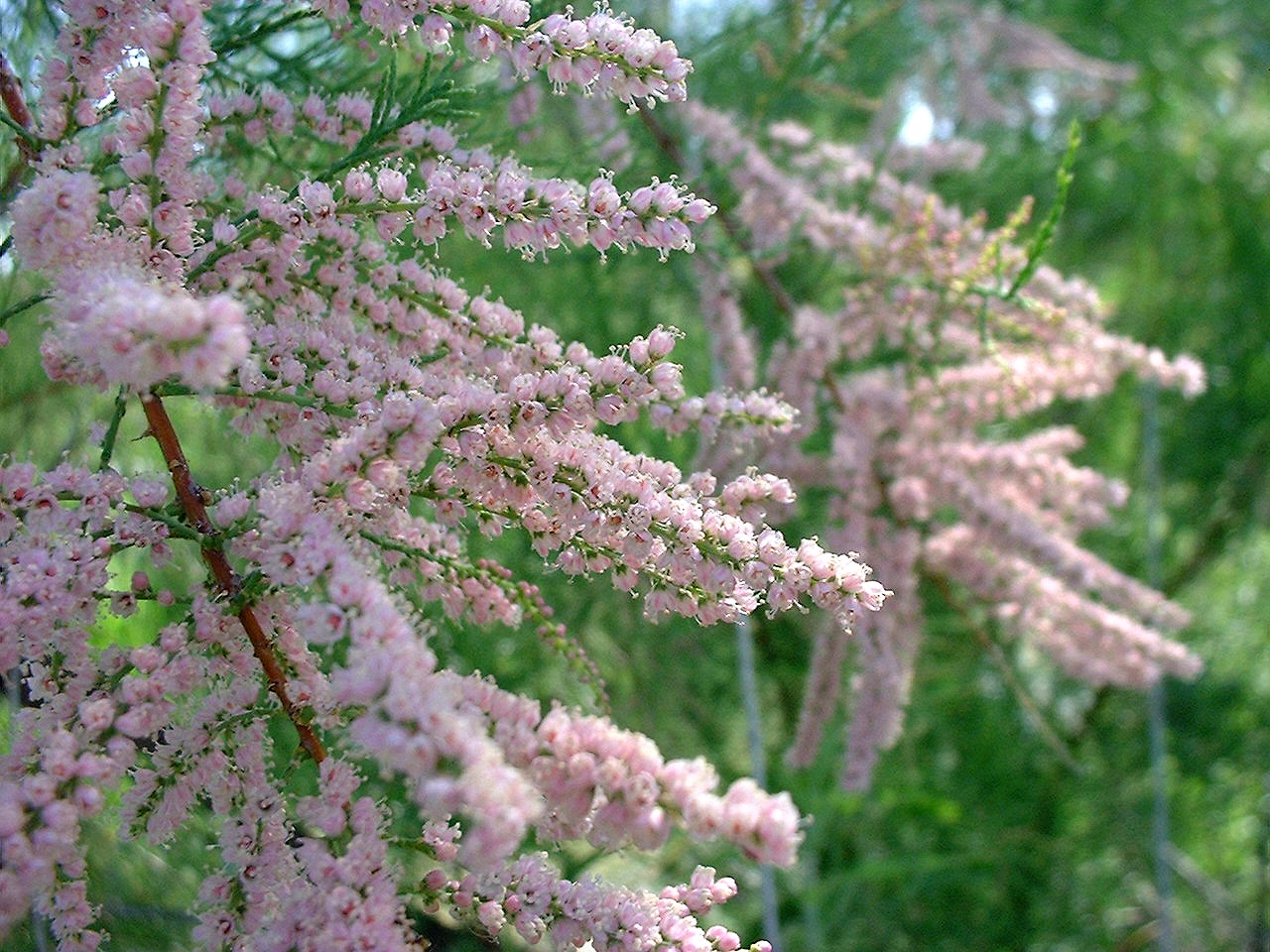
Shrub or small tree 5-20 feet tall. Scale-like, blue-green leaves. Pink to white feathery flower spikes. Reddish-brown bark. Forms dense thickets along waterways.
Control Methods
Biological control using the tamarisk leaf beetle (Diorhabda spp.) is effective and widely used. Cut-stump or basal bark herbicide treatment for individual plants. Mechanical removal for small infestations.
Herbicide Recommendations
Imazapyr or triclopyr as cut-stump or basal bark treatment. Biological control (Diorhabda beetles) is preferred for large infestations. Requires permits near water.
⚠️ Always read and follow pesticide label directions. Contact your county weed superintendent for site-specific recommendations. Permits may be required near water.
Need help managing this weed?
Skyline CWMA can connect you with technical assistance, cost-share programs, and licensed contractors for treatment on your property.