Widely distributed but controllable. High priority for control or eradication where possible.
Quick Facts
Report your sighting through EDDMapS to help us track and respond to new infestations.
Report on EDDMapSSpotted Knapweed
Centaurea stoebe
Overview
Spotted knapweed is one of the most widespread invasive plants in the western United States. It produces allelopathic chemicals that inhibit native plant growth and can form monocultures that eliminate native vegetation. It is a significant problem in the Skyline CWMA region.
How to Identify
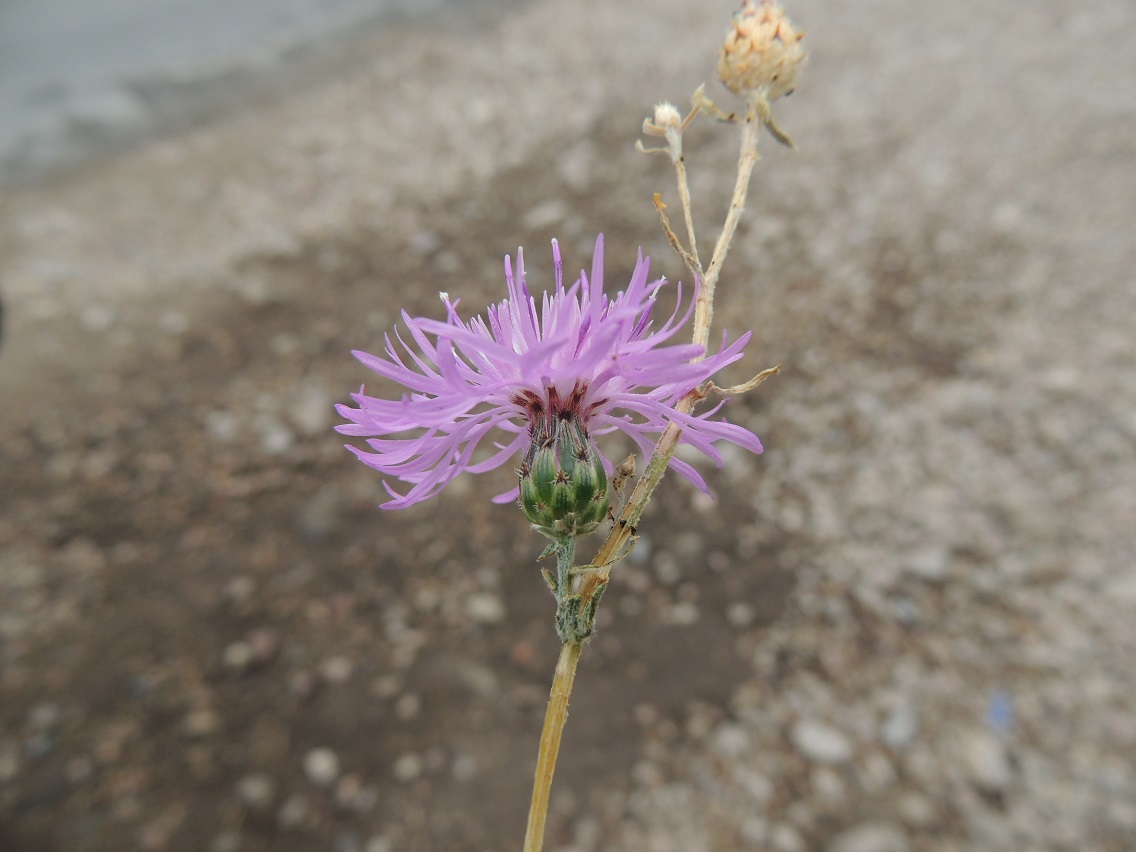
Biennial or short-lived perennial 1-4 feet tall. Pink to purple flower heads with distinctive black-tipped bracts that give a "spotted" appearance. Deeply lobed lower leaves, smaller upper leaves.
Control Methods
Biological control using seed-head flies and root-boring moths is effective for large infestations. Herbicide treatment for new infestations. Competitive seeding is essential after treatment.
Herbicide Recommendations
Clopyralid, picloram, or aminopyralid. Biological control (Urophora flies, Cyphocleonus root borer) is recommended for established infestations.
⚠️ Always read and follow pesticide label directions. Contact your county weed superintendent for site-specific recommendations. Permits may be required near water.
Need help managing this weed?
Skyline CWMA can connect you with technical assistance, cost-share programs, and licensed contractors for treatment on your property.