Widely distributed but controllable. High priority for control or eradication where possible.
Quick Facts
Report your sighting through EDDMapS to help us track and respond to new infestations.
Report on EDDMapSPurple Loosestrife
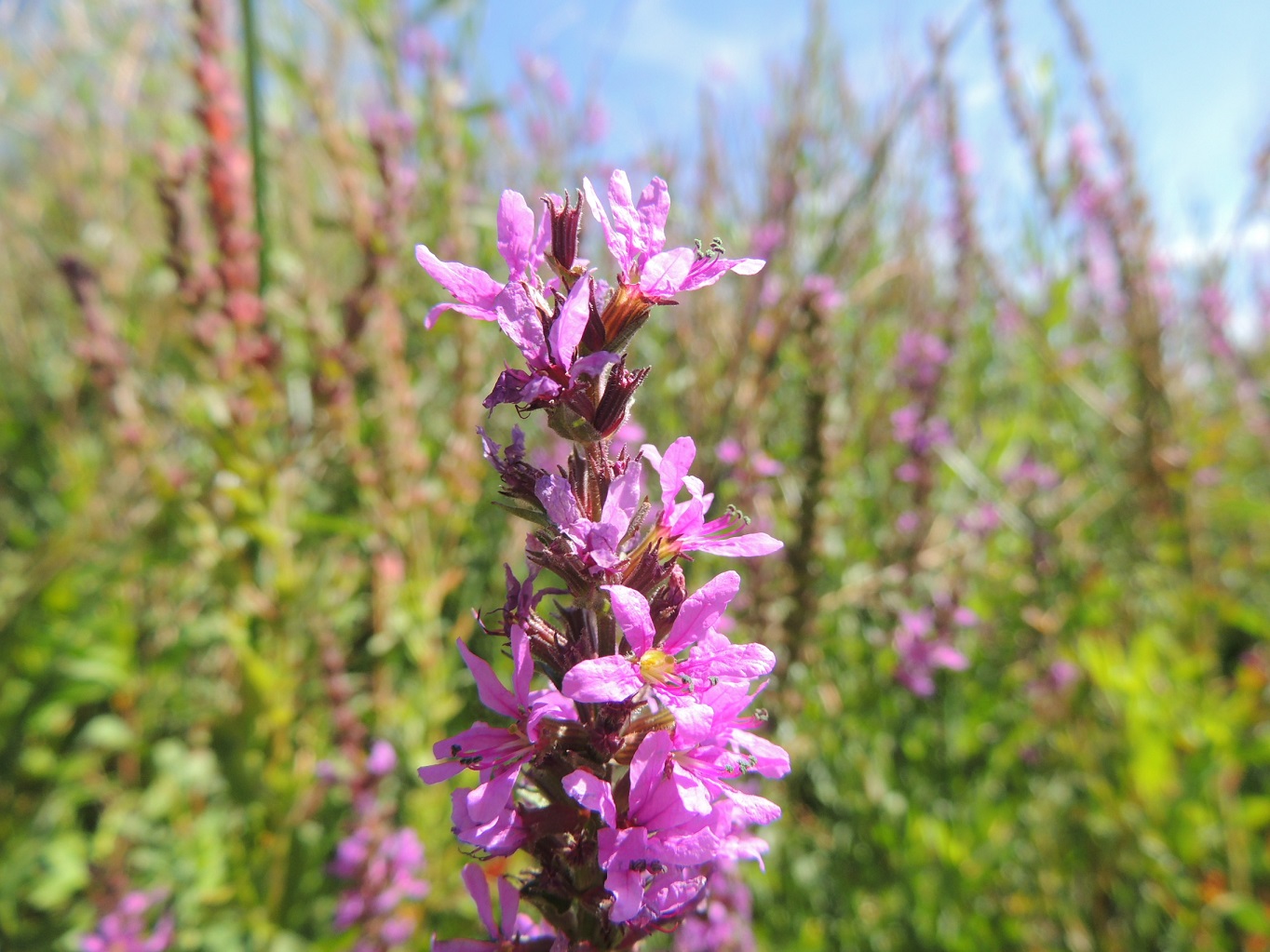
Lythrum salicaria
Overview
Purple loosestrife is a perennial wetland plant from Europe that forms dense monocultures in wetlands, displacing native vegetation and reducing wildlife habitat. A single plant can produce up to 2.7 million seeds per year. It is a significant threat to Utah's riparian ecosystems.
How to Identify
Perennial 3-7 feet tall. Showy magenta to purple flower spikes. Leaves are lance-shaped, opposite or whorled. Square stems. Forms dense clonal colonies.
Control Methods
Biological control using Galerucella beetles is very effective and widely used. Herbicide treatment for new infestations. Manual removal for very small infestations.
Herbicide Recommendations
Glyphosate or imazapyr near water (with appropriate permits). Biological control (Galerucella beetles) is preferred for established infestations.
⚠️ Always read and follow pesticide label directions. Contact your county weed superintendent for site-specific recommendations. Permits may be required near water.
Need help managing this weed?
Skyline CWMA can connect you with technical assistance, cost-share programs, and licensed contractors for treatment on your property.