
Widely spread across Utah. Control efforts focus on reducing or eliminating new or expanding populations.
Quick Facts
Report your sighting through EDDMapS to help us track and respond to new infestations.
Report on EDDMapSJohnson Grass / Sorghum Almum
Sorghum halepense / Sorghum almum
Overview
Johnson grass is a tall perennial grass from the Mediterranean that invades agricultural fields, roadsides, and disturbed areas. It can produce hydrogen cyanide (prussic acid) under stress conditions, making it toxic to livestock. Its extensive rhizome system makes it difficult to control.
How to Identify
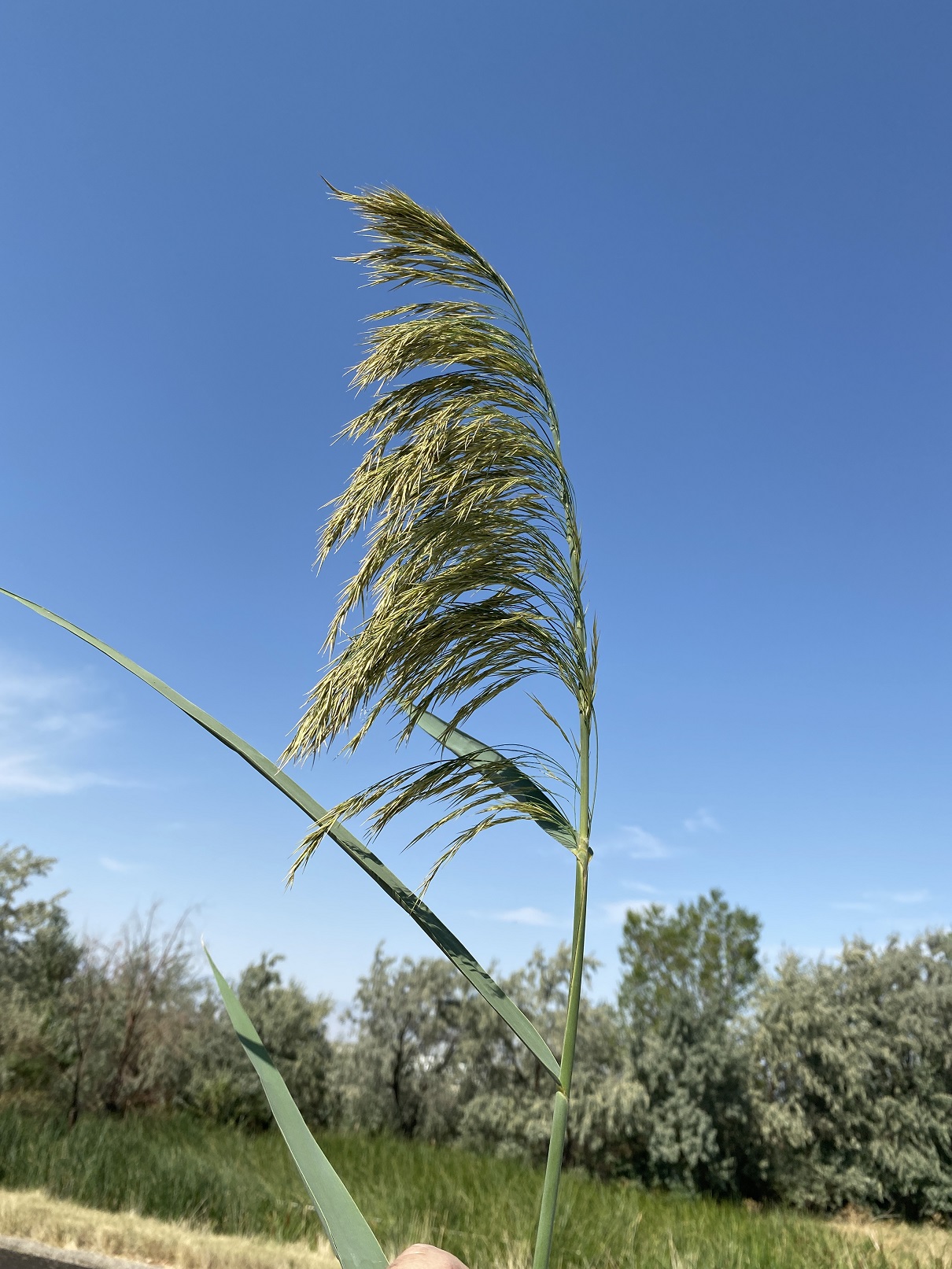
Tall perennial grass 3-8 feet tall. Large, open, reddish-purple seed heads. Leaves are broad (up to 1 inch wide) with a white midrib. Spreads by both seeds and rhizomes.
Control Methods
Repeated tillage weakens plants. Herbicide treatment is most effective. Avoid grazing stressed plants due to prussic acid risk.
Herbicide Recommendations
Glyphosate, fluazifop, or quizalofop. Apply when plants are actively growing.
⚠️ Always read and follow pesticide label directions. Contact your county weed superintendent for site-specific recommendations. Permits may be required near water.
Need help managing this weed?
Skyline CWMA can connect you with technical assistance, cost-share programs, and licensed contractors for treatment on your property.