Widely distributed but controllable. High priority for control or eradication where possible.
Quick Facts
Report your sighting through EDDMapS to help us track and respond to new infestations.
Report on EDDMapSDyer's Woad
Isatis tinctoria
Overview
Dyer's woad is a biennial or short-lived perennial from Eurasia that was historically used as a blue dye. It invades rangelands, roadsides, and disturbed areas and can form dense stands. It is allelopathic and produces chemicals that inhibit native plant growth.
How to Identify
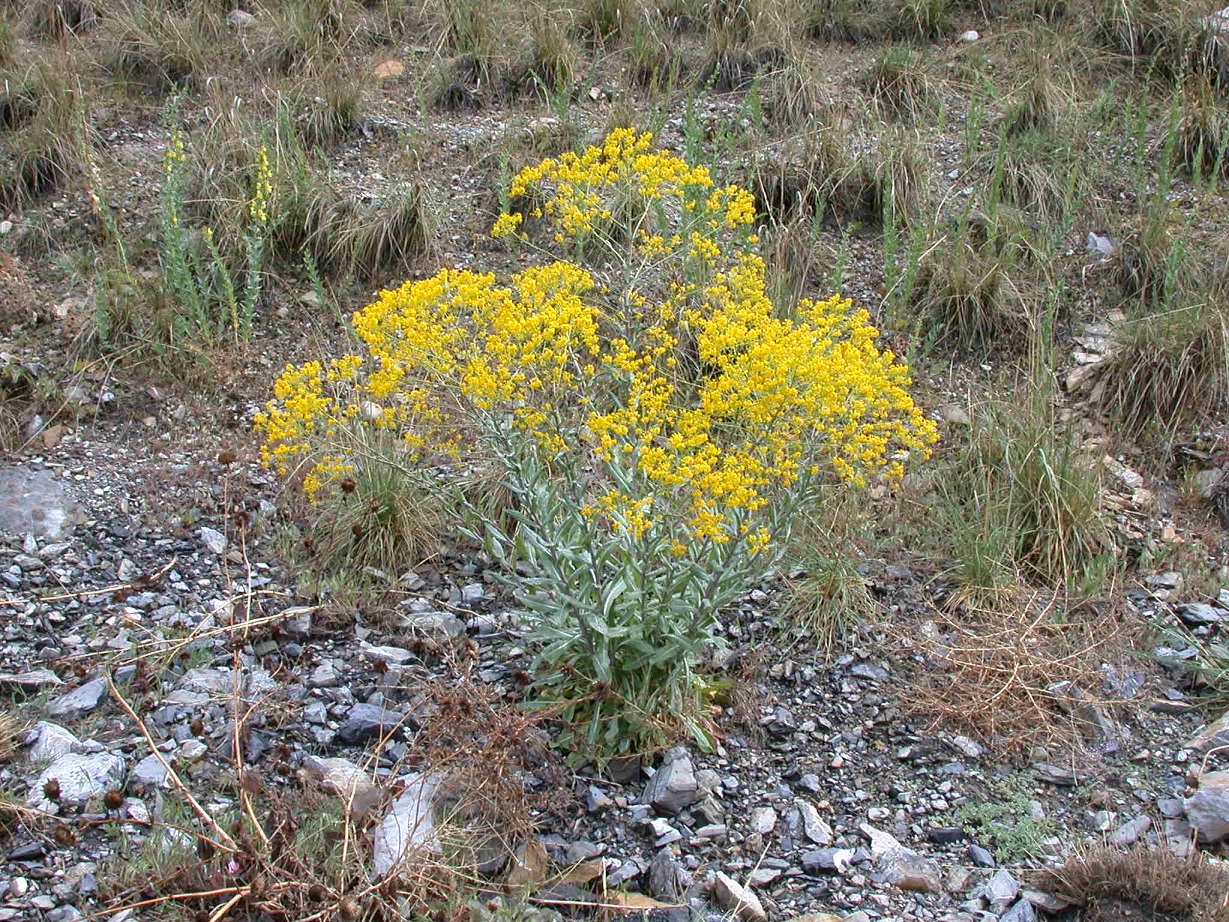
Biennial or perennial 2-4 feet tall. Small yellow flowers in dense clusters. Distinctive dark purple to black pendulous seed pods (silicles). Blue-green leaves with a waxy coating.
Control Methods
Hand-pull or dig rosettes before flowering. Mowing before seed set. Herbicide treatment on rosettes in fall or spring.
Herbicide Recommendations
Chlorsulfuron, metsulfuron, or picloram. Apply to rosettes in fall or early spring.
⚠️ Always read and follow pesticide label directions. Contact your county weed superintendent for site-specific recommendations. Permits may be required near water.
Need help managing this weed?
Skyline CWMA can connect you with technical assistance, cost-share programs, and licensed contractors for treatment on your property.