Limited distribution in Utah. High priority to eradicate all known populations and prevent new ones.
Quick Facts
Report your sighting through EDDMapS to help us track and respond to new infestations.
Report on EDDMapSAfrican Mustard
Brassica tournefortii
Overview
African mustard is an annual plant from the Mediterranean that invades desert and semi-arid ecosystems. It germinates in fall and winter, giving it a competitive advantage over native plants. Dense infestations can increase fire frequency and intensity.
How to Identify
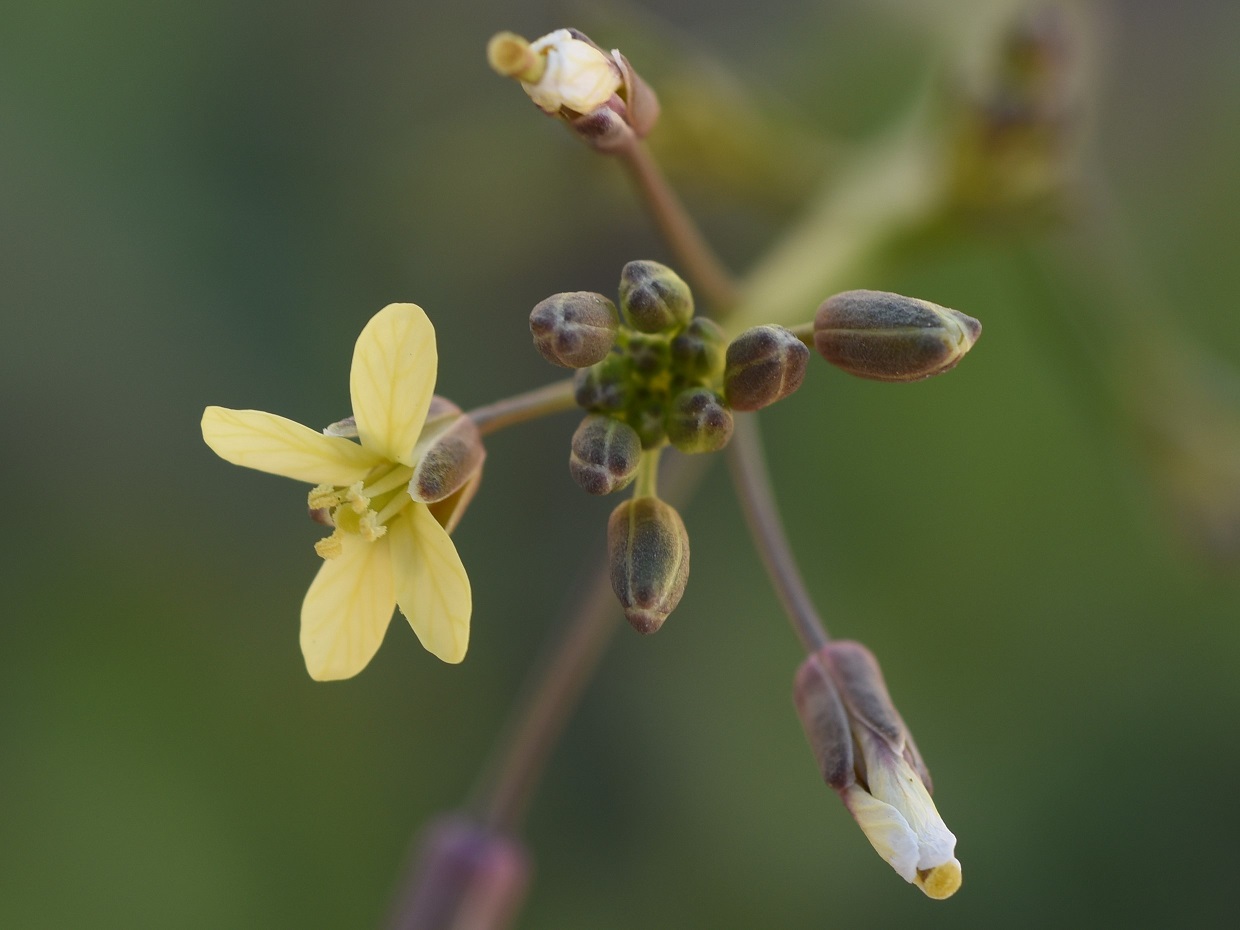
Annual plant 6-24 inches tall. Basal rosette of deeply lobed, bristly leaves. Small pale yellow flowers. Long, narrow seed pods (siliques). Resembles other mustards but has distinctive bristly hairs.
Control Methods
Hand-pull or hoe before seed set. Pre-emergent herbicides in fall. Competitive seeding with native species.
Herbicide Recommendations
Imazapic or chlorsulfuron as pre-emergent. Glyphosate or 2,4-D as post-emergent on young plants.
⚠️ Always read and follow pesticide label directions. Contact your county weed superintendent for site-specific recommendations. Permits may be required near water.
Need help managing this weed?
Skyline CWMA can connect you with technical assistance, cost-share programs, and licensed contractors for treatment on your property.